


Grading
After harvest every prawn is graded by eye, and weighed. The two are separate: a grade describes how the animal looks, not how big it is, and all three grades run the full range of weights.
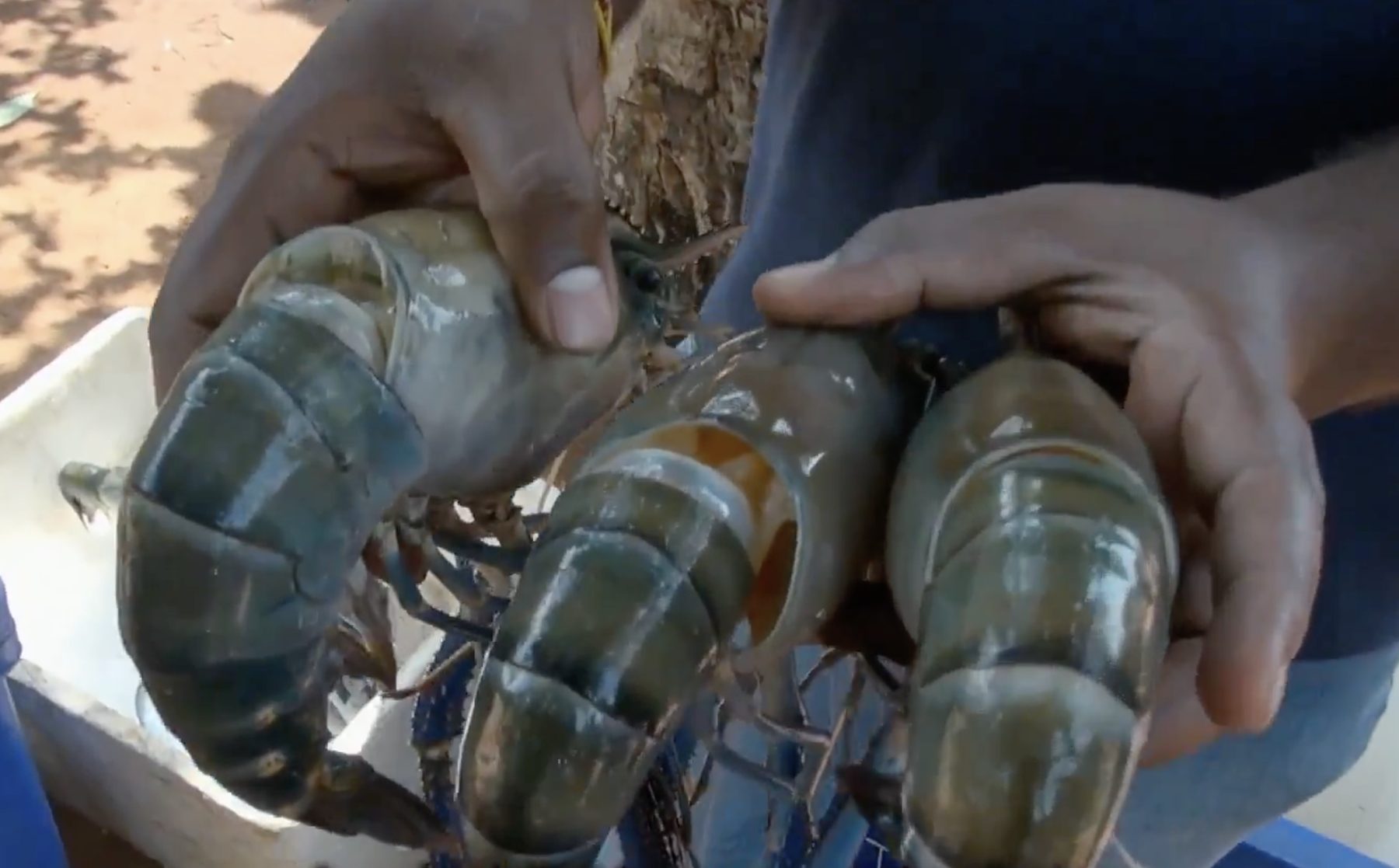
One of each grade, held together. The differences are in the shell.
Visual quality checks
Every animal is looked over as it comes off the water: shell condition, colour, and how it has been handled since it was caught. Anything that fails the check does not go for export.
Grades
Graded by eye, not by size
What that inspection produces is a grade: A, B or C. It describes the animal, not its size, and it is given by people who handle the catch every day. Weight is recorded separately, and both travel on the box.
- APremium
- BStandard
- CCommercial
LIVE
Live-market selection
Not a fourth grade. A separate selection of animals in condition to travel alive, for buyers who sell the prawn at the table.
Weights
Every grade, every size
Weight is the second axis. It is recorded per animal and travels with the grade on the box, so an order is a grade and a weight together rather than one or the other.
250 below
Under 250 g. Consistent portion size for foodservice.
250+
250 g and above. The most commonly shipped band.
400+
400 g and above. Increasingly hard to source from intensive systems.
600+
600 g and above. The size open-reservoir grow-out reliably produces.
Grading sets the product line
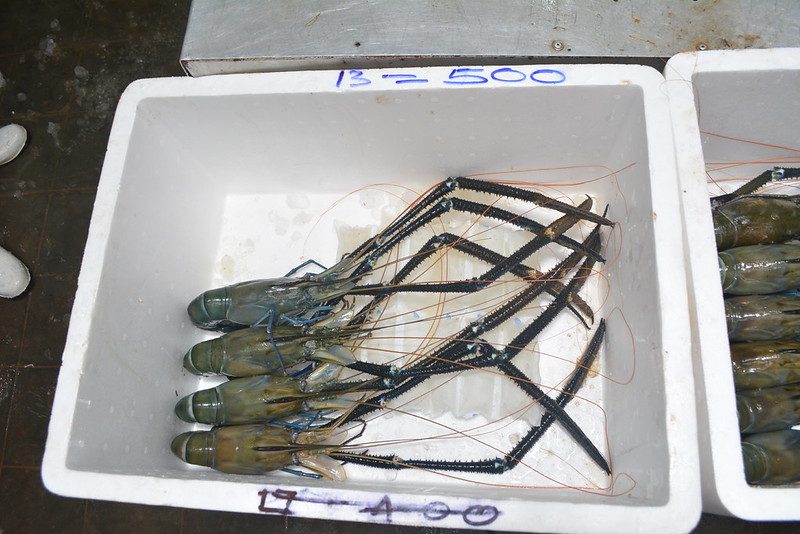
The grade an animal receives decides how it is packed and where it goes: live, fresh-chilled head-on shell-on, or cryogenically frozen. Grade and weight together define what a buyer is quoted, which is why both are written on the box: B-400 is a grade B prawn at 400 g.
Not sure which grade you need?
Tell us the market you’re selling into and the weight you want, and we’ll tell you which grade fits and what we can ship.